

















Weterings Machinery: “In the greenhouse, Tele Radio stands head and shoulders above the rest”
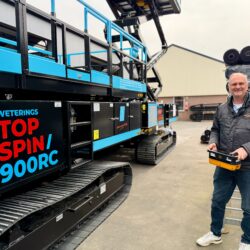
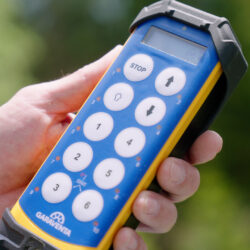
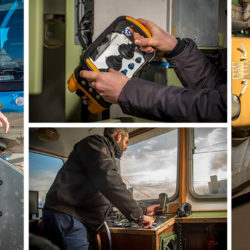
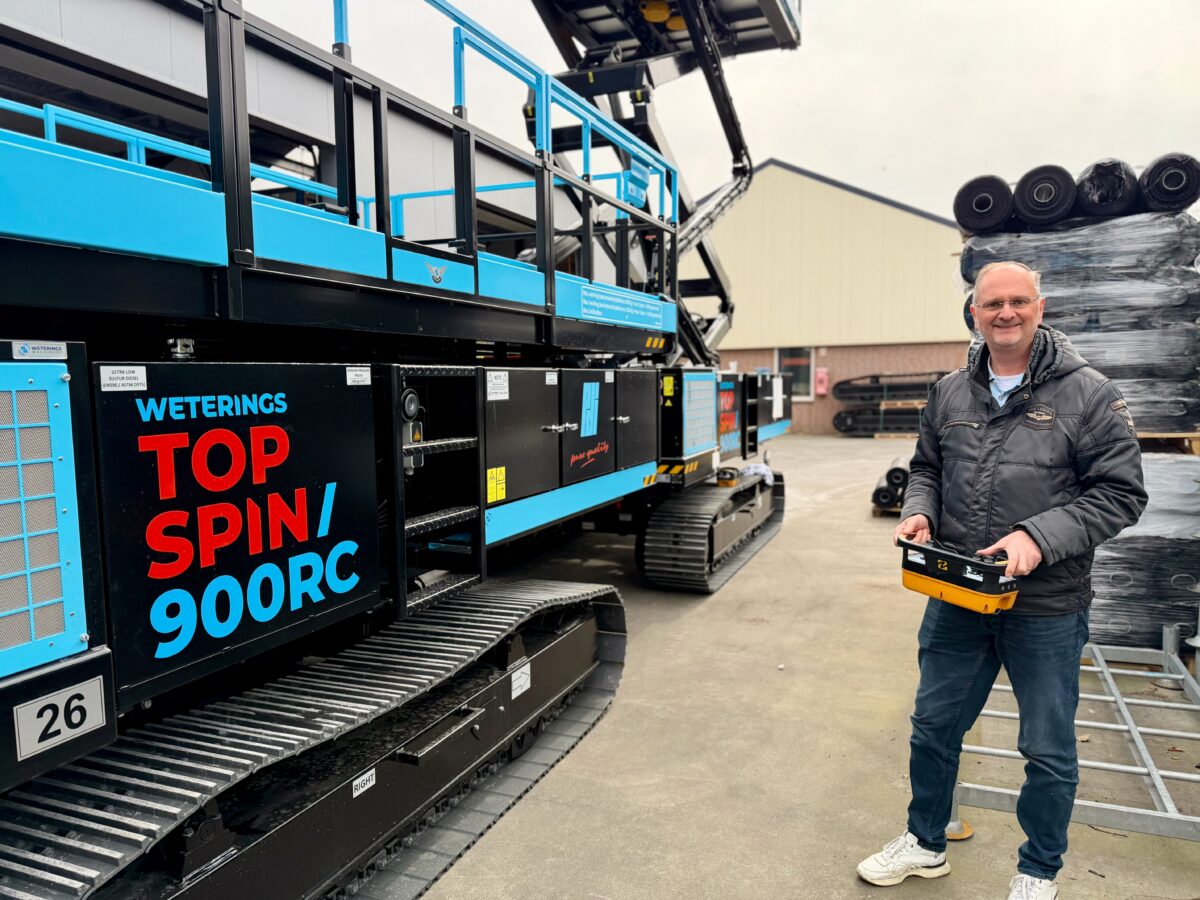
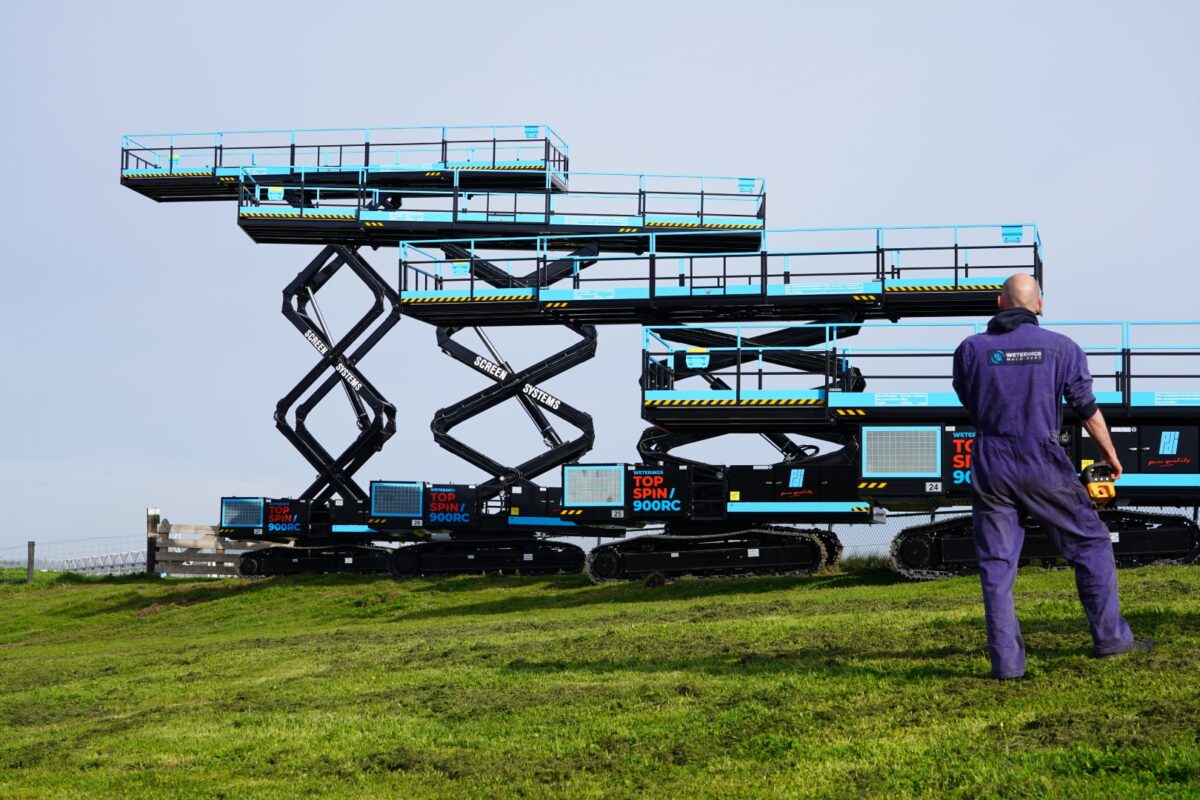
Look at one of Weterings Machinery’s aerial work platforms from the outside and you will mostly see imposing steel: a tracked undercarriage, a scissor arm that climbs to nearly 9 meters, a platform that pivots hydraulically in every direction. Look at the other side of the machine – literally in the operator’s hand – and you’ll find something far smaller: a Tele Radio wireless remote control. “For us, the remote is really the complete control panel,” says co-owner Fabian Hertogh. “The only thing left on the machine itself is an emergency control.”
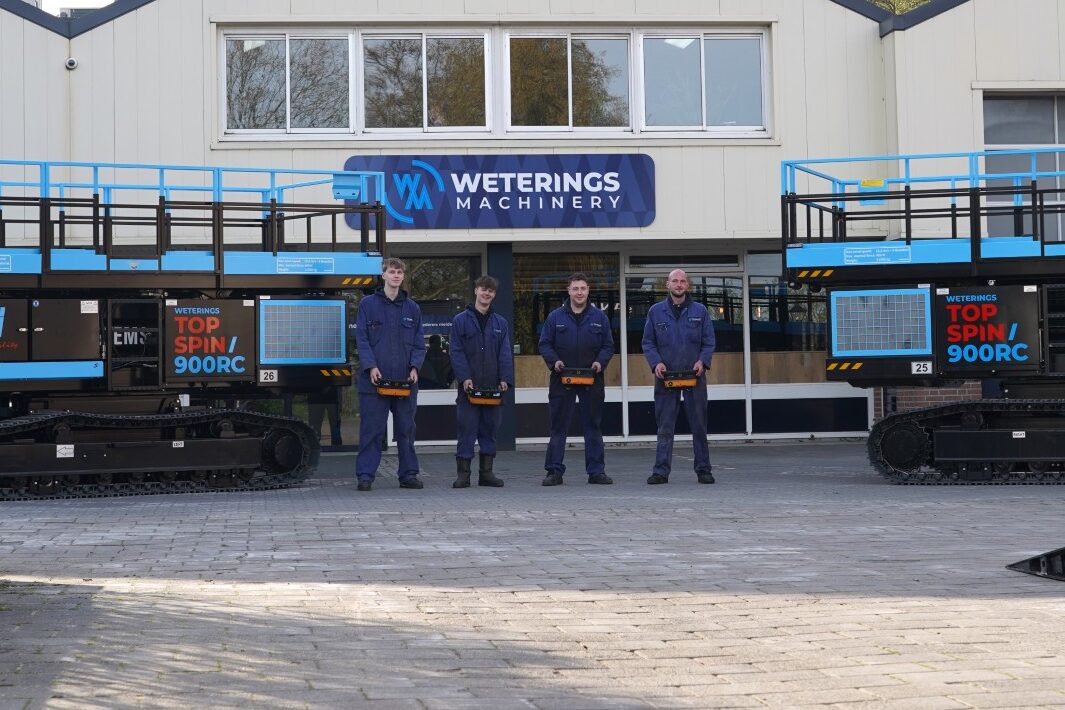
Based in the Westland, the heart of the Dutch glasshouse country, Weterings Machinery has a history that reaches back to the middle of the last century. Grandfather Henk Weterings started out as a one-man business in 1940. Today, run by three equal partners – Fabian Hertogh, his cousin Nick Weterings, and Rob van den Berg – the company has grown into an international machine builder for horticulture and related industries.
Text continues below the image.
The change from the original “Weterings Mechanisatie” to “Weterings Machinery” says a lot about where the company is headed. “When people hear ‘mechanization,’ they picture lawnmowers and chainsaws,” Hertogh explains. “But alongside being a dealer for several brands, we develop and build our own machines – from spray rigs and crop shredders to aerial platforms and laser grading blades. And those machines travel the world. Hawaii, Chile, Puerto Rico, Mexico, Canada, the United States, New Zealand, Japan, China, and right across Europe – you’ll find them everywhere.”
Top of the class in the greenhouse
The relationship between Weterings Machinery and Tele Radio began more than five years ago, for one very concrete reason: interference. “We were working with several remote-control suppliers, but in a greenhouse environment we sometimes ran into trouble,” Hertogh says. “A greenhouse is full of steel structures and has a glass roof on top. When an operator is walking between the rows of tomato or pepper crops, the signal has to push through leaves, wires, and sometimes even metal threads woven into plants.”
“We found that Tele Radio’s systems gave us by far the fewest problems. So we switched. In the greenhouse, Tele Radio simply stands head and shoulders above the competition.”
“Until we tried Tele Radio, we’d get interference every now and then. In the greenhouse, Tele Radio simply stands head and shoulders above the competition.”
– Fabian Hertogh, co-owner of Weterings Machinery
Text continues below the image.
Not an accessory, but the control panel
Nowadays, Tele Radio remotes sit on very nearly the whole Weterings fleet – on the electric reelers, the “Weri Compact Rollers”; on the waste-handling machines, the “Bio Hoppers”; on the shredders, the “Bio Choppers”; and on the aerial platforms, the “Top-Spins.”
The Top-Spin platform was built for constructing and fitting out greenhouses – think of installing screen cloth for climate control and blackout, or mounting grow lights. A tracked undercarriage keeps ground pressure low, the upper structure rotates 90 degrees to span the full width between the greenhouse posts, and the scissor arm reaches to around 9 meters. Working height: roughly 11 meters. Lifting capacity on the platform: up to 1,500 kilograms.
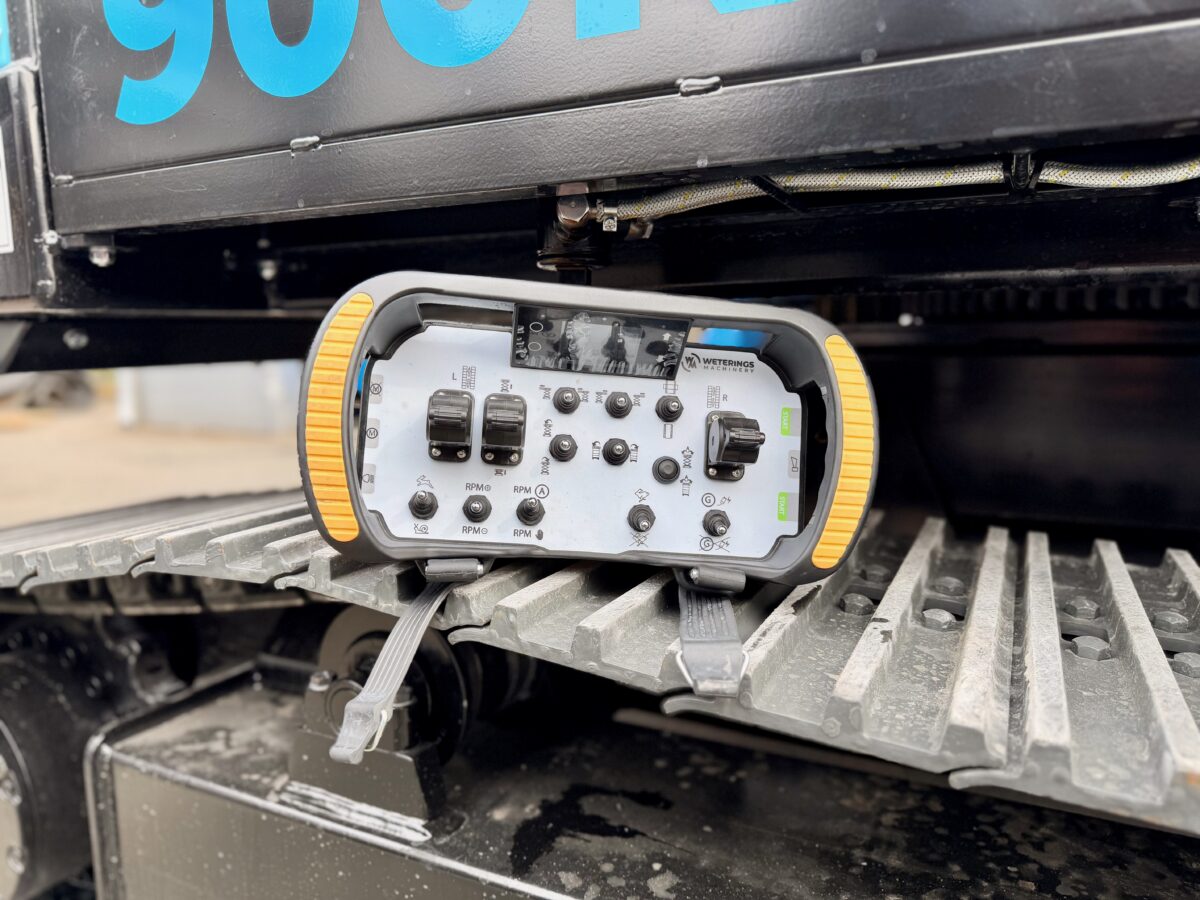
And that is where the remote lives. Not as an accessory, but as the control panel.
Text continues below the image.
“A tremendous amount of control”
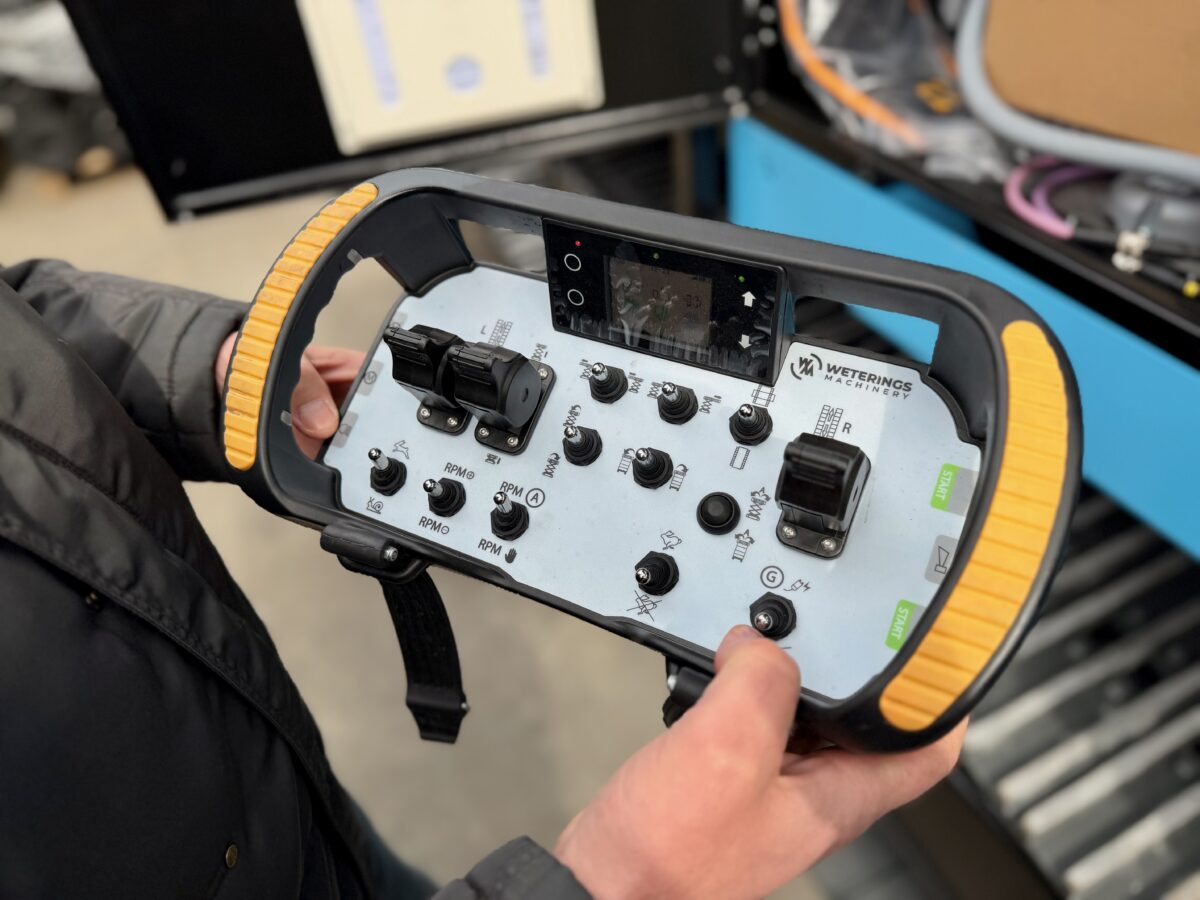
“Everything runs through the transmitter,” Hertogh explains as he demonstrates the functions. “Starting and stopping the engine, throttle control, driving forward and backward, raising and lowering, extending and retracting the platforms front and rear, rotating, leveling forward and backward, left and right. There are even two speed settings – a hare and a snail – that let you cap not just the top speed but the throw of the joystick as well. It gives the operator a tremendous amount of control.”
The machine’s own panel carries only an emergency control; the real work happens with the transmitter in hand. It’s a way of working that hands the operator a big advantage: a clear view. “When you’re working at height, you want to see what you’re doing,” Hertogh says. “Whether you’re hanging a screen cloth, mounting a light, or threading the machine between the greenhouse posts – with the remote in hand you’ll always find yourself wherever you get the best view of the job. That doesn’t just make the work more pleasant; it makes it safer and more accurate. The remote isn’t an extra for us – it is the control.”
Text continues below the image.
A relationship that grows as needs change
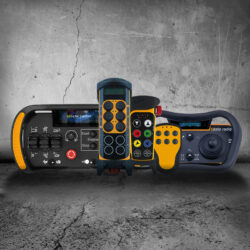
Finally, what stands out is how the relationship with Tele Radio has grown right along with the company’s needs. It started with standard transmitters on the smaller applications and grew into fully custom-configured TEQ transmitters on the more complex machines. Time and again, the two sides sit down together to work out which functions go where, and how to program them as safely as possible.
“It’s a back-and-forth,” Hertogh concludes. “We tell Tele Radio which functions we need and at what safety level, and they help us find the best solution for it. It has to work that way, because with us every machine is a little different. And at the same time, all those remotes have to do exactly what they’re supposed to – every time, in every greenhouse, in every corner of the


 Tele Radio supports the world wide preservation of the Tiger with WWF.