





















Handling and lifting large material and heavy loads may need simultaneous lifting by two cranes (even three / four cranes) or trolleys controlled at the same time. When cranes work in this mode, it is said that they are operating in “tandem mode“. Usually, the cranes are controlled by the same remote control for easier operation and a more ergonomic control. It, therefore, acts as a primary transmitter.
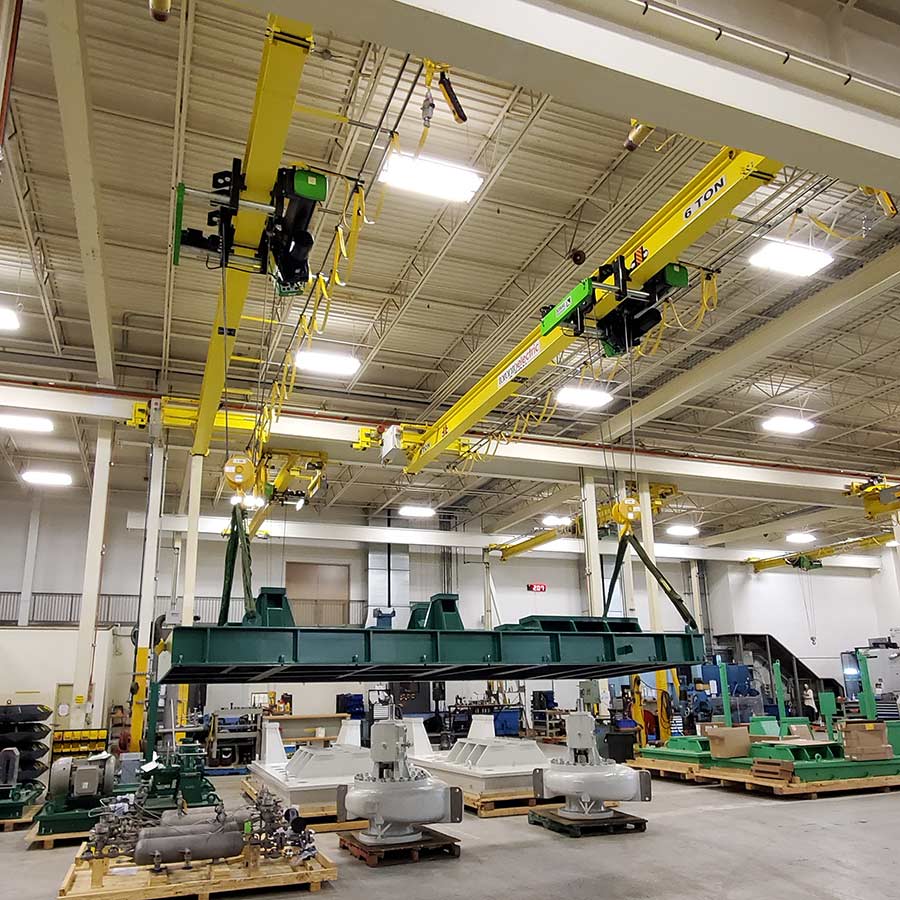
The operator at any time can choose the desired trolley or crane to be controlled, from the most appropriate location with a better field of vision and the necessary safety distance.
For a safe control in tandem mode, the communication between cranes is mandatory within EU, by transceivers equipment inter-communicated to each other in all their movements, this definitely increases the safety level of the application due to the uninterrupted communication between the receivers on the cranes.
Usually, when a crane or trolley reaches the first limit switch it will go from fast to slow speed in synchronization with the rest and after that, if the last limit switch is activated, the application will stop immediately, thus both cranes must be always synchronized so that the load being lifted and the operators do not suffer any accident. It can also be applied for hoists in case of reaching the load limit in lifting, preventing to do so if a limit switch for that purpose is activated
The Tele Radio Tiger-Lynx system for tandem function complies with the European standard EN15011:2011-05, which specifies that for lifting applications with tandem function they must be intercommunicated in all their movements.
2 EOT Cranes – 1/2/1+2 Mode
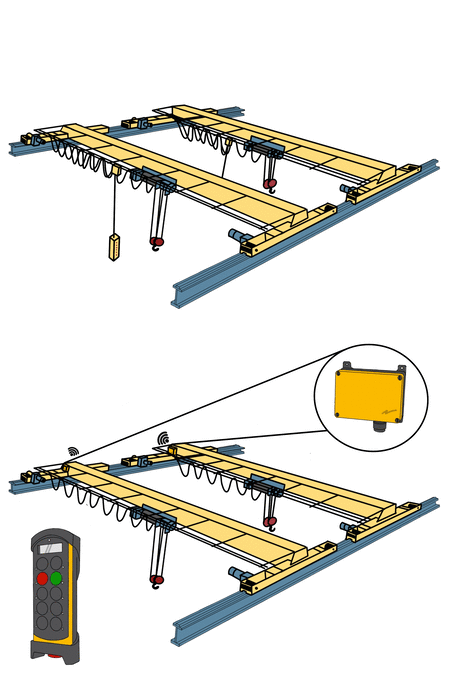
In this mode, there are two wireless transmitters and two receivers (one for each crane). One of the transmitters is configured as primary and the other as secondary, the same applies to the receivers.
The user can choose the crane he wants to work individually, or can use the primary transmitter to work in tandem mode, that is, to be able to control simultaneously both cranes. When any of the signals are activated (by speed/end limit switch or by overloading the hoists, for example), it will immediately communicate to the 2nd receiver to stop, resulting in both cranes stopping instantly.
3 EOT Cranes – 1/2/3; 1+2; 2+3 Mode
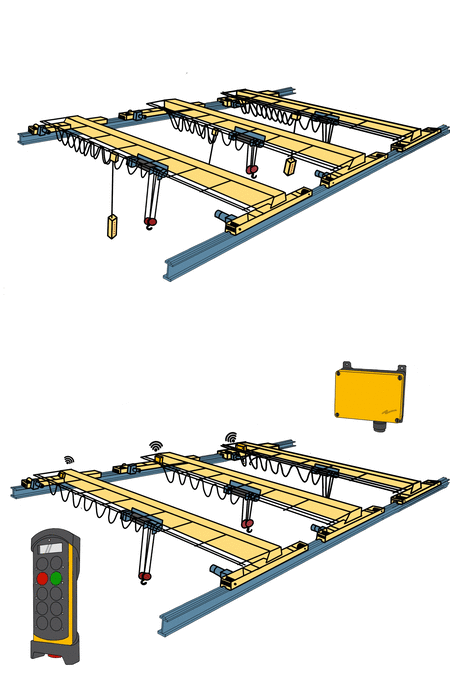
Another situation that requires an advanced and inter-communicated system is when we add a third crane in the same factory for such intended application. Necessary when the loads to handle are even greater in dimensions and/or higher tonnage. Commonly found at windmill blades tandem lifting.
Each crane requires its standard equipment, with a transmitter and a receiver. Equipment #2 (the central position in the building) is configured as primary, since it will be the common one in any of the cases in tandem.
The user will be able to select the desired crane to work individually, but also can use the primary transmitter at any time to work in tandem mode to control 1 + 2 (crane # 1 + crane # 2) or 2 + 3 (crane # 2 + crane # 3). To do this properly and safely, it is necessary that the secondary transmitters of cranes 1 and 3 respectively have logged out accordingly. It will never be able to control a crane with two transmitters at the same time, due to the intrinsic safety of Tele Radio’s Tiger remote control equipment and its high level of safety (SIL3 PLe certified).
Note for installers: In both cases, regarding the installation of the equipment, it must be taken into account that an external electrical panel for each crane has to be mounted, including potential-free relays that will receive the limit switches or the overload signals from the crane installation. The recommended location for the installation of the external panel would be outside the control panel, to avoid possible noise and electrical interferences.
The overall result in combination with the advanced technology and components used are really impressive. A solution that has proven to be robust at hundreds of factories around the world and that the market is increasing its demand every year.
Tiger CTC System: the ultimate tandem solution
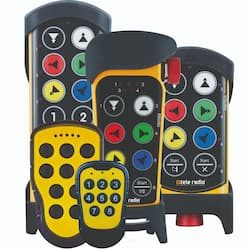
Wireless tandem control
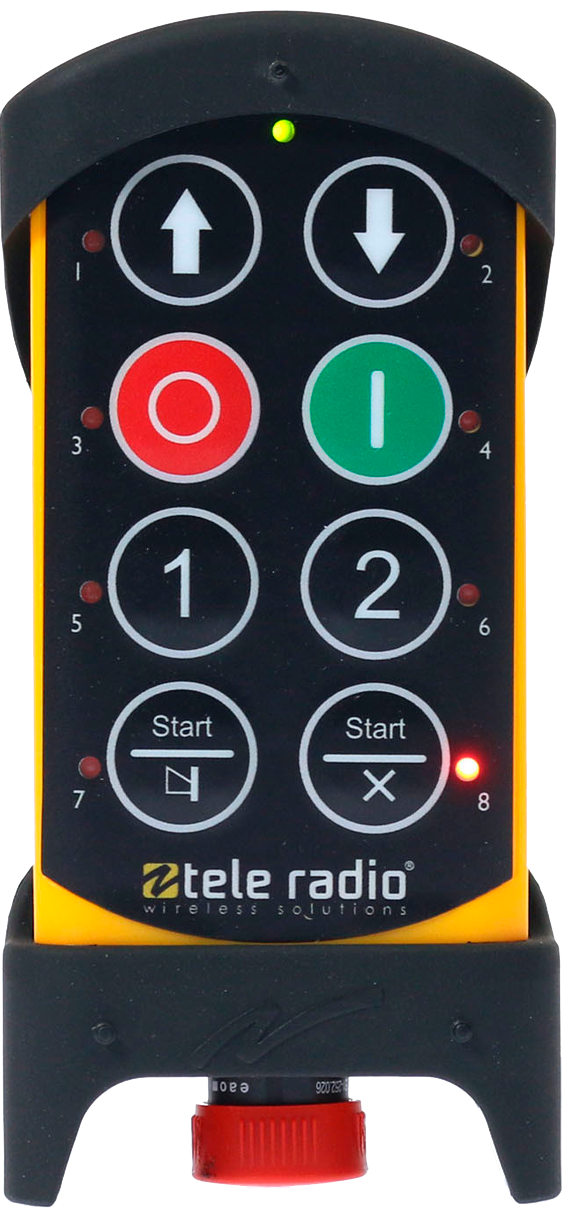
Tiger T9-1
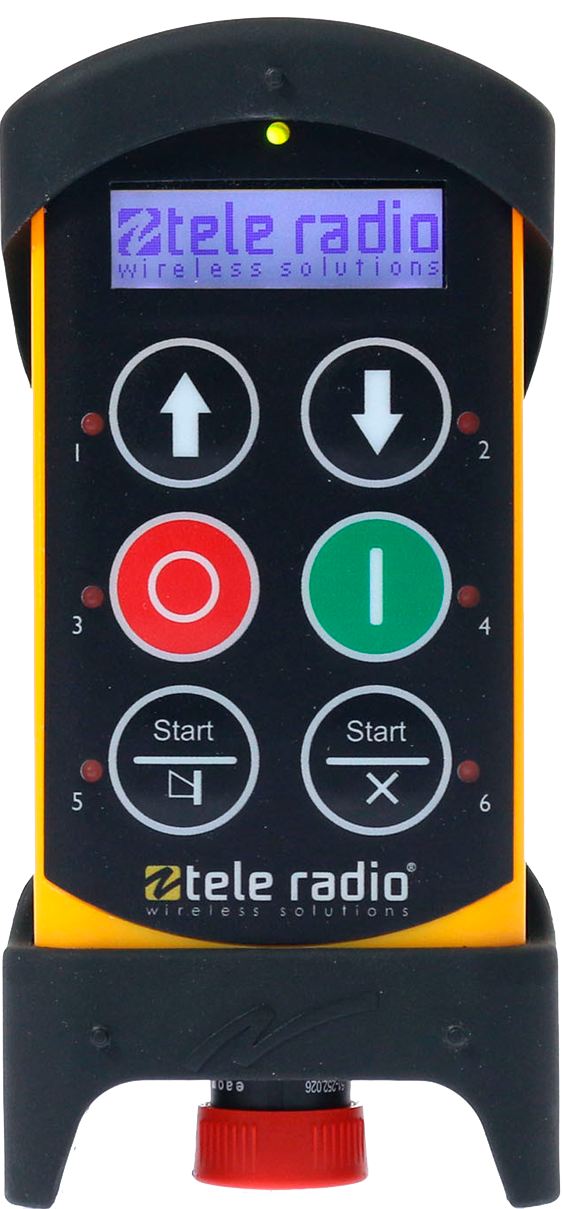
Tiger T9-2
Tiger T11-5
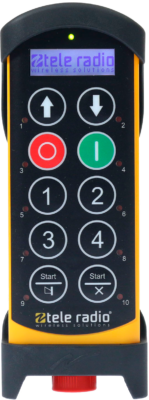
Tiger T11-4
- Transmitter with 6 to 12 dual-step buttons for precise and ergonomic control.
- Duplex (two-way) communication via LEDs or LCD display, optimizing usability and operator feedback.
- Range of up to 500 meters (extendable with accessories).
- Operational range of up to 30 m between cranes, with no signal loss or communication delay.
- Automatic real-time synchronization of speeds and stops.
- Customizable controls — from button layout to application-specific accessories.
- Safety rating SIL 3 / PLe, meeting the highest industry standards.
Tandem receivers

Receiver R4
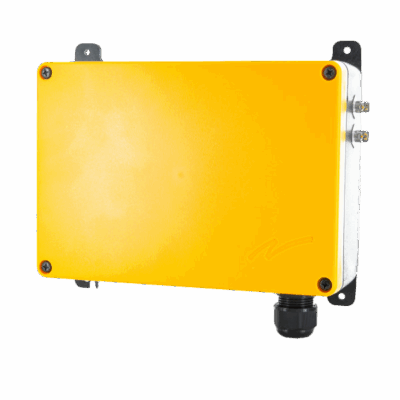
Receiver R9
- Wireless receiver versions available with 2+4 relays, 2+10 relays, 2+15 relays, or 2+29 relays (availability upon request).
- The R23 receivers are modular — add relays, fieldbus protocols, additional inputs, analog outputs, and/or radio communication boards as needed.
- Store up to 8 transmitters in the receiver’s memory. For safety, only one transmitter can operate at a time.
- The system includes built-in safety features. In continuous mode, the transmitter sends a constant heartbeat signal; if the receiver fails to detect it, the system will automatically stop.
- If a transmitter is lost or damaged, any other transmitter of the same model can be used as a replacement — no external hardware required.
- If needed, the system can also be configured so that multiple transmitters communicate with the same receiver.
Contact us
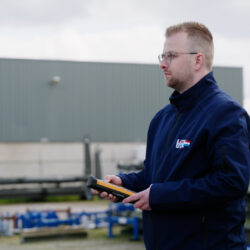
Thanks to Toronto Electric & CPC Pumps for providing the pictures of their cranes working tandemly with Tele Radio Systems.




 Tele Radio supports the world wide preservation of the Tiger with WWF.